
Lab-Grown Diamond on Black Friday: Your Buying Checklist
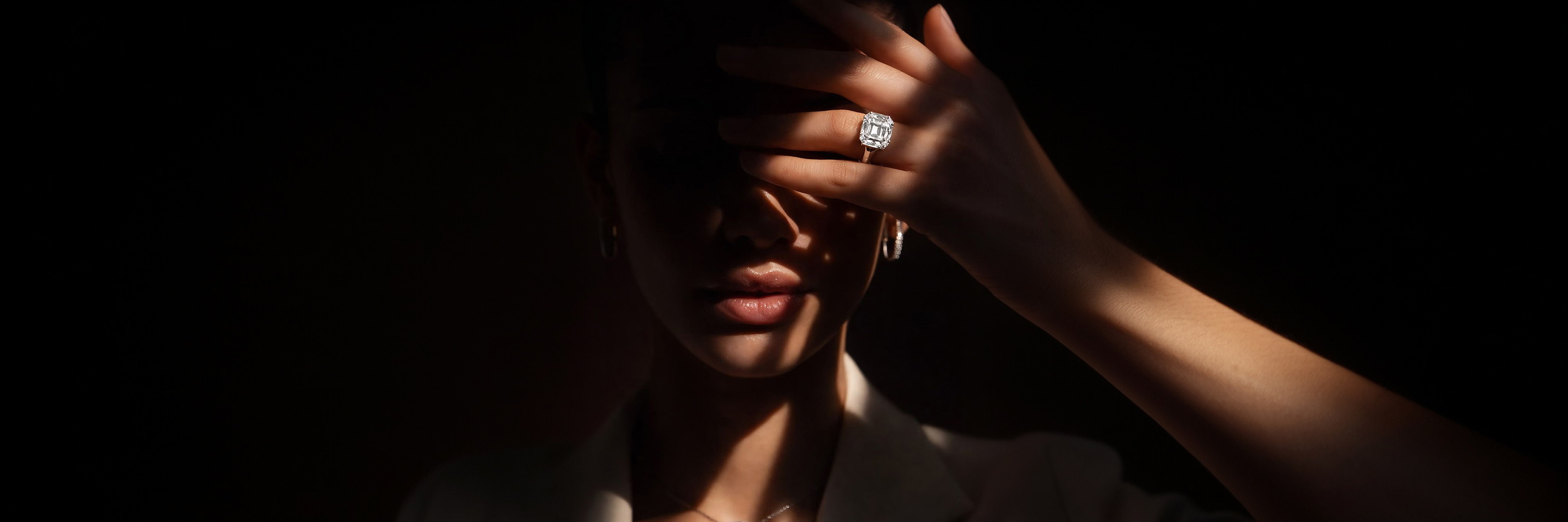
If you are thinking of buying a lab-grown diamond on Black Friday (this year it falls on 27 November), the most useful thing you can take with you is not a voucher but a checklist. Sale days are designed to make you decide fast, and a diamond ring is exactly the kind of purchase that is better decided slowly: the price is only part of the story, and what really matters is written on the certificate.
In this article we go through, in order, what is worth checking before you pay: lab-grown versus natural diamonds, the certificate, clarity (the famous VVS), colour, cut and metal. At the end you will find a table for comparing two offers on the same criteria and a short plan for not getting swept along by the rush.
Lab-grown or natural diamond: the first decision
Same material, different origin
A lab-grown diamond is a real diamond: it has the same chemical composition, the same hardness and the same sparkle as a natural one. What changes is its origin (it is grown in a laboratory instead of being mined) and its price. At Omara we sell both, always with an independent GIA or IGI certificate.
- Price: lab-grown diamonds are approximately 60–80% cheaper than natural diamonds of comparable quality. For the same budget you can go for a larger carat weight or a higher quality.
- Resale: here there is a flip side worth knowing. When reselling, you typically get back approximately 20–40% of the purchase price with a lab-grown diamond and 40–60% with a natural one.
- Appearance: to the naked eye they cannot be told apart.
If you want to understand the two options better before choosing, the diamond guide explains calmly how each type is formed. And if you have already settled on a lab-grown stone, here is also how to look after a gold ring with a lab-grown diamond: spoiler, exactly like any other diamond ring.
The certificate: the one thing that is not negotiable
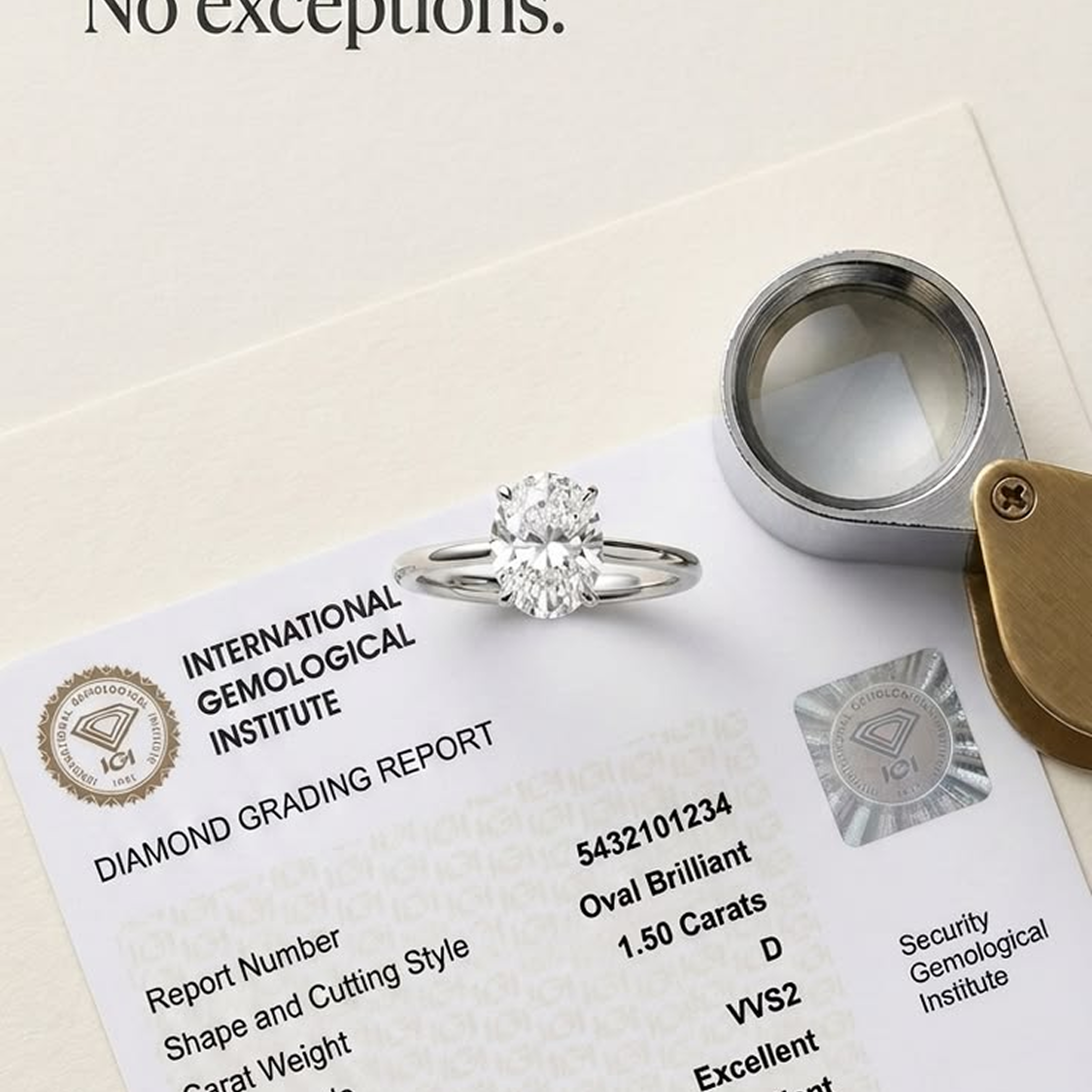
A diamond without a certificate is a promise; with a certificate it is a fact. An independent GIA or IGI report describes the specific diamond you are going to receive: carat weight, colour, clarity, cut and proportions. It is what lets you compare two “similar” rings and discover they are not that similar. On the certification page you can see how we work with both laboratories.
Before you buy, make sure of the following:
- There is a certificate from an independent laboratory (GIA or IGI), not a “shop certificate”.
- The report matches the diamond in the ring and states clearly whether it is lab-grown or natural.
- The details match what you are promised on the product page: carats, colour and clarity.
Clarity (VVS) and colour: what you can see and what you cannot
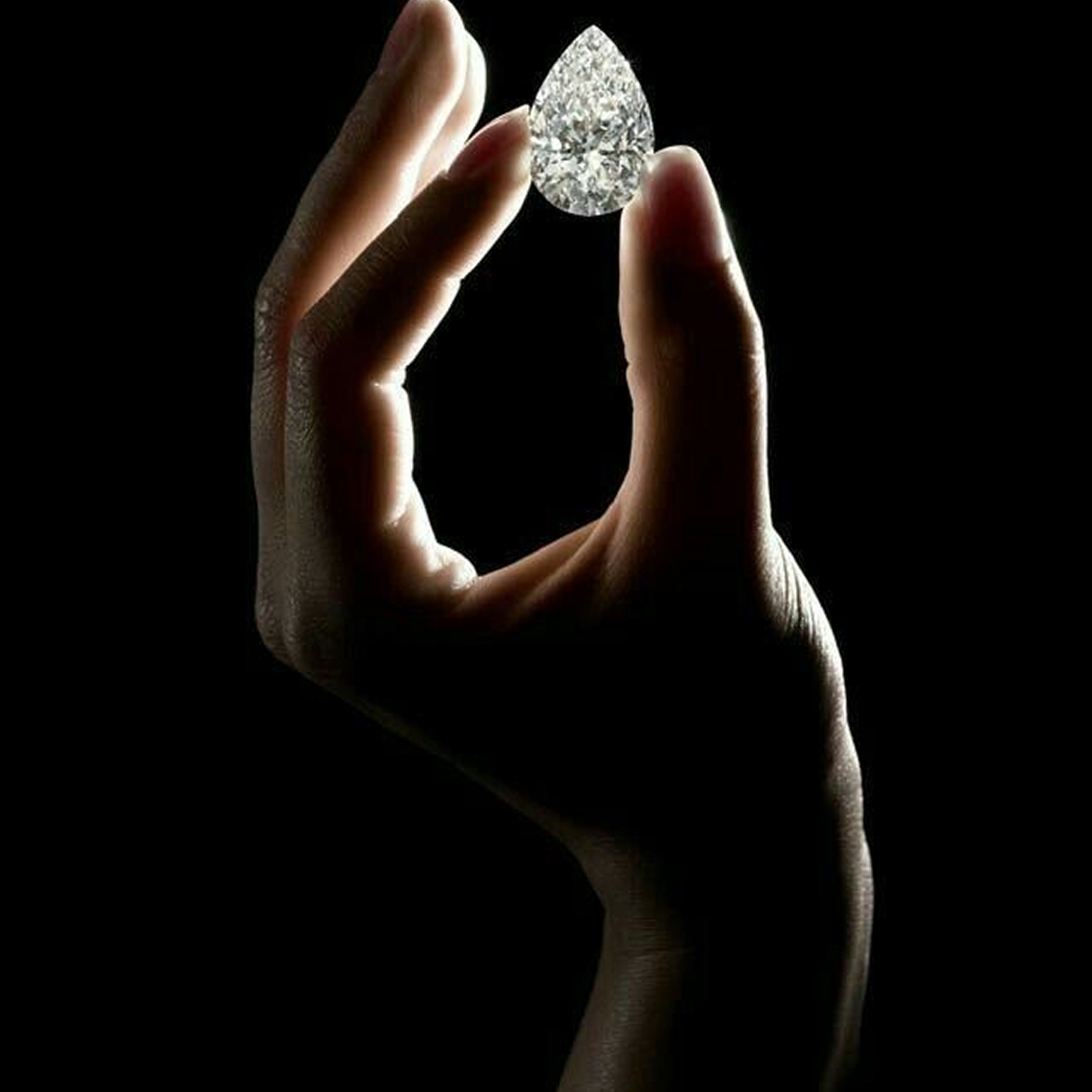
Clarity measures the tiny internal inclusions in a diamond. The scale runs from highest to lowest purity: FL and IF (practically flawless), then VVS1 and VVS2 (minute inclusions, very hard to see even under magnification), VS1 and VS2 (very small), SI1 and SI2 (somewhat more visible), and finally I1 to I3 (inclusions visible to the naked eye). The higher up, the scarcer and the more expensive, and the price gap grows faster than the difference you can actually see.
Is VVS worth paying for?
It depends on what you are after. For a ring worn every day, a well-chosen VS or even SI1 clarity usually looks clean to the naked eye, and saving there lets you spend on what you can perceive: the cut and the size. VVS makes sense if you want top quality on principle, if the diamond is large (inclusions show more the bigger the stone), or if you value owning an exceptional diamond even when nobody can see the difference.
Colour works the opposite way to what many people imagine: the best colour is no colour. The scale runs from D (colourless) to Z (light yellowish tint). Grades D to F are considered colourless and G to J near-colourless; in a white gold or platinum ring, the difference between an F and an H is very subtle for most eyes.
Cut, carats and metal: what gives (or takes away) sparkle
The cut is what influences a diamond’s sparkle most, even more than clarity. Round brilliant cuts are designed to return light with maximum intensity; shapes such as oval or pear have a character of their own. A well-cut diamond with fewer carats can sparkle more than a larger but poorly proportioned one, so always look at the cut and proportion details on the certificate and not just the weight.
Carats are weight, not size: the look also depends on the cut. And the metal changes the final impression a great deal. If you are after a diamond engagement ring in white gold, take a look at the selection of white gold engagement rings: it is a very elegant metal, though it is worth remembering that it usually has a rhodium plating that may need renewing over the years.
Checklist table: compare two offers on the same criteria
When you have two favourite rings, fill in this table for each one. If you cannot complete a row, ask that question before you pay.
| What to check | Why it matters | What to ask or look at |
|---|---|---|
| Origin | Changes the price and resale value, not the appearance | Is it lab-grown or natural? It must be stated in the report |
| Certificate | Describes the specific diamond | GIA or IGI? Does the number match this stone? |
| Clarity | Affects the price and, in large stones, what you see | Do VS or SI1 do for this use? VVS for a specific reason? |
| Colour | More colourless costs more, but the difference is barely noticeable | D–F or G–J? See how it looks with the chosen metal |
| Cut and proportions | Determine the sparkle | What does the report say about cut, polish and symmetry? |
| Carats | It is weight; the visible size depends on the cut | What is the exact weight of the centre stone? |
| Metal | Changes the look, the hardness and the upkeep | White, yellow or rose gold, or platinum? What care does it need? |
| Ring size and timing | Avoids surprises with a gift | Can it be resized afterwards? What delivery times are quoted now? |
Good to know: clarity and colour letters do not stand on their own. A badly cut VVS diamond will sparkle less than a well-proportioned VS one. If the report feels like a foreign language, that is normal: ask us for help and we will explain it calmly before you decide.
Black Friday without the rush: a simple plan
Black Friday does not change what makes a diamond good; it only changes the calendar of your decision. Before 27 November, do this:
- Set a maximum budget: decide the figure before you see any advert. It is the best defence against “since we’re here, a little bit more”.
- Compare certificates, not discounts: a big percentage off an inflated price is no better than a reasonable price. Look at what the report says.
- Look at the terms, not just the price: exchanges, returns and resizing. Delivery conditions vary, so check the current times on the shipping and delivery page, and do not leave the purchase to the last days if it is a Christmas gift (24 December).
- Do not buy out of fear of missing the offer: a good diamond will still be a good diamond next week.
If you are buying the engagement ring without her knowing, the article on buying engagement rings online or in a shop answers the typical questions about buying over the internet.
Choose lab-grown if…
- You prefer more size or better quality for the same budget
- For you the origin does not change the sentimental value of the ring
- You will wear it a lot and do not plan to resell it
- You want to leave room in the budget for the metal or personalisation
Choose natural if…
- It matters to you that the stone formed in the earth
- You value it keeping a larger share of its price when resold
- You accept paying more for that provenance
- It is a gift for someone who prefers it for the sake of tradition
Summary: the checklist in five points
To buy a lab-grown diamond with a clear head: a clear origin, a GIA or IGI certificate that matches the stone, clarity and colour that are reasonable for your use, a good cut, and a metal you like and know how to maintain. If you tick those five points, the day you buy matters much less than what you buy.
Certified diamond rings – explore our rings with a lab-grown or natural diamond, each with a GIA or IGI certificate, and apply this article’s checklist to your favourites.
Frequently asked questions
Next article
10 Carat Gold: What It Is, Whether It's Good and How to Choose
What gold carats mean, when 10 carat gold makes sense compared with 14k and 18k, and how to choose the carat and colour for your ring or earrings.