
10 Carat Gold: What It Is, Whether It's Good and How to Choose
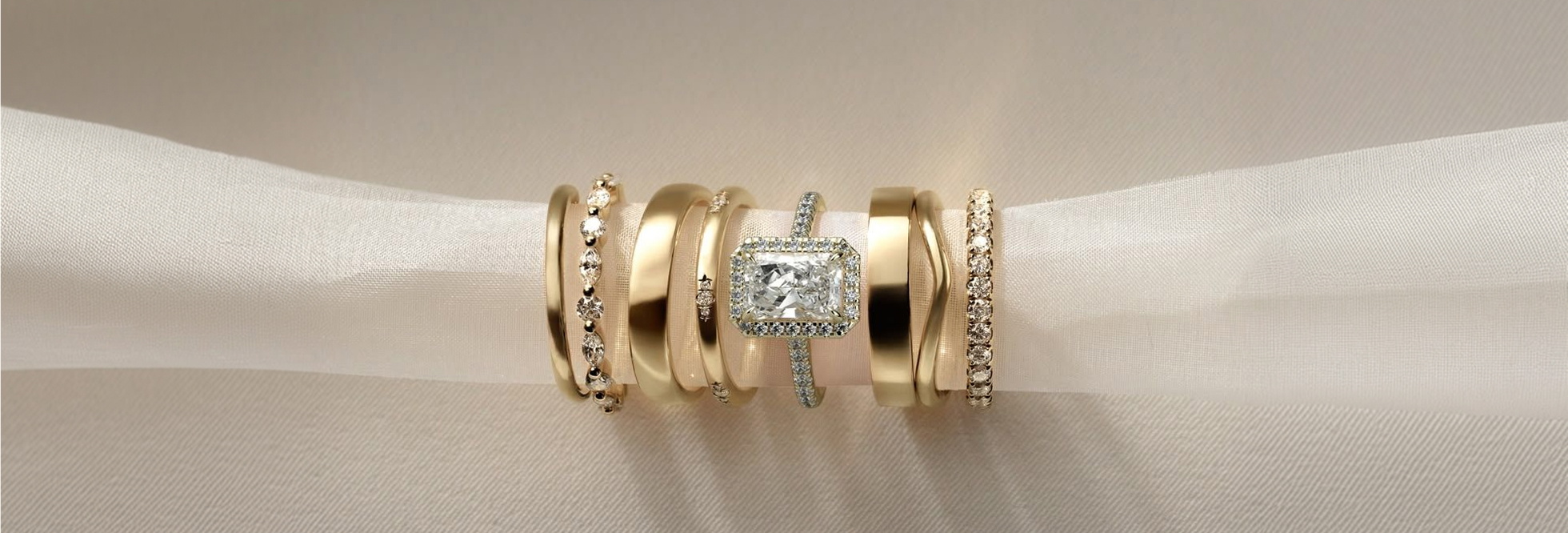
10 carat gold raises a lot of questions: does it really exist, is it any good, and is it worth choosing over 14 or 18 carat? The question behind those is almost always the same: if I'm buying a gold ring or a pair of earrings, which carat and which colour suit me?
In this guide we explain what gold carats mean, when 10k gold makes sense, how it differs from 18k yellow gold and how white, yellow and rose gold change the look. We include a comparison table and a short guide to deciding without going round in circles.
What gold carats are (and why they have nothing to do with diamond carats)
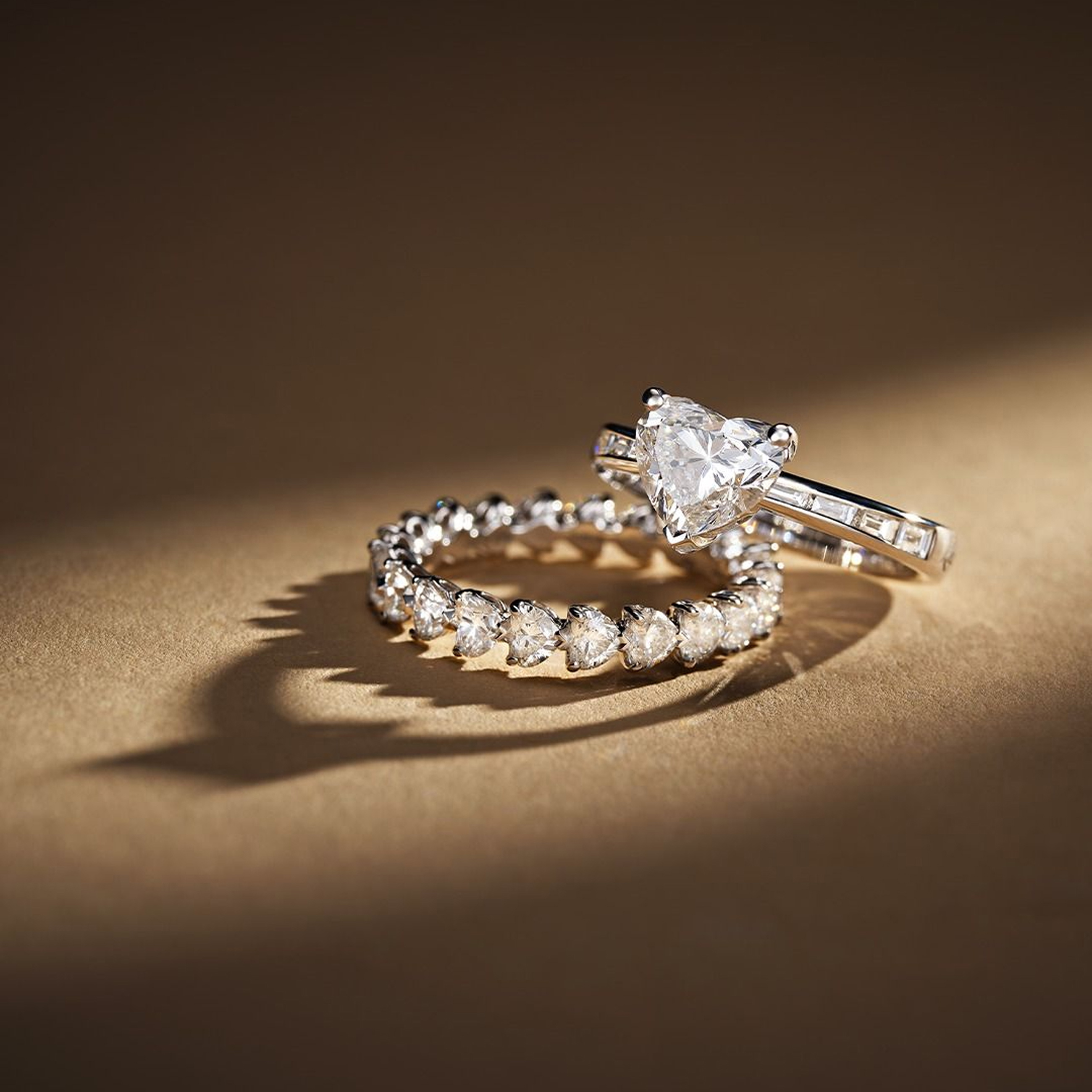
Gold carats measure purity, diamond carats measure weight
Gold carats measure purity out of a maximum of 24. Pure gold (24 carat) is too soft to wear every day, so in jewellery it is mixed with other metals that give it hardness and colour. The lower the carat number, the less gold in the alloy. Don't confuse this with the carats of a diamond, which measure its weight.
- 10 carat (10k): approximately 41.7% gold, hallmark 417.
- 14 carat (14k): 58.5% gold, hallmark 585.
- 18 carat (18k): 75% gold, hallmark 750.
The fineness is stamped on the piece as a hallmark. If you can't find any mark on a gold ring, ask before you buy.
10 carat gold: does it exist and is it good?
Yes, 10k gold exists and it is real gold, although with less than half gold in its composition. It is not a scam or "fake gold": it is an alloy with a lower percentage of gold. That said, in Spain it is not the most common carat in jewellery, where 18 carat is far more usual and 14 carat is increasingly seen. For a detailed look at 10k, see the article What is 10 carat gold?.
The honest answer to "is 10 carat gold good?" is that it depends on what you are looking for:
- In its favour: with more other metals in the alloy, it is harder and withstands knocks and scratches better. It is usually the cheapest per piece.
- Against it: it contains less gold, so the colour is slightly less intense and can change over time. With more mixed metals, there is also a higher chance of bothering sensitive skin: if that is you, always ask for the exact composition.
- What doesn't change: with less gold, its value as a metal is lower than that of a higher carat. It is something you buy to wear and enjoy.
18k yellow gold, 14k or 10k: a comparison
In practice, the choice comes down to a balance between purity, hardness and price. For a more detailed comparison of 14k and 18k, see the article 14k vs 18k gold; here is the short version.
| Carat | Gold in the alloy | Colour | Hardness | Price |
|---|---|---|---|---|
| 10k (417) | Approx. 41.7% | Paler, less intense | The highest | The most affordable |
| 14k (585) | 58.5% | Balanced | High | Mid-range |
| 18k (750) | 75% | The warmest and richest | Slightly softer | The highest of the three |
Good to know: hardness is not only a matter of carats. A well-made piece with a sensible thickness will last years of wear at any carat. And if something is "gold plated", it is not solid gold: this is explained in the article Gold plated: is it real gold?.
White, yellow and rose gold: colour doesn't depend on carats
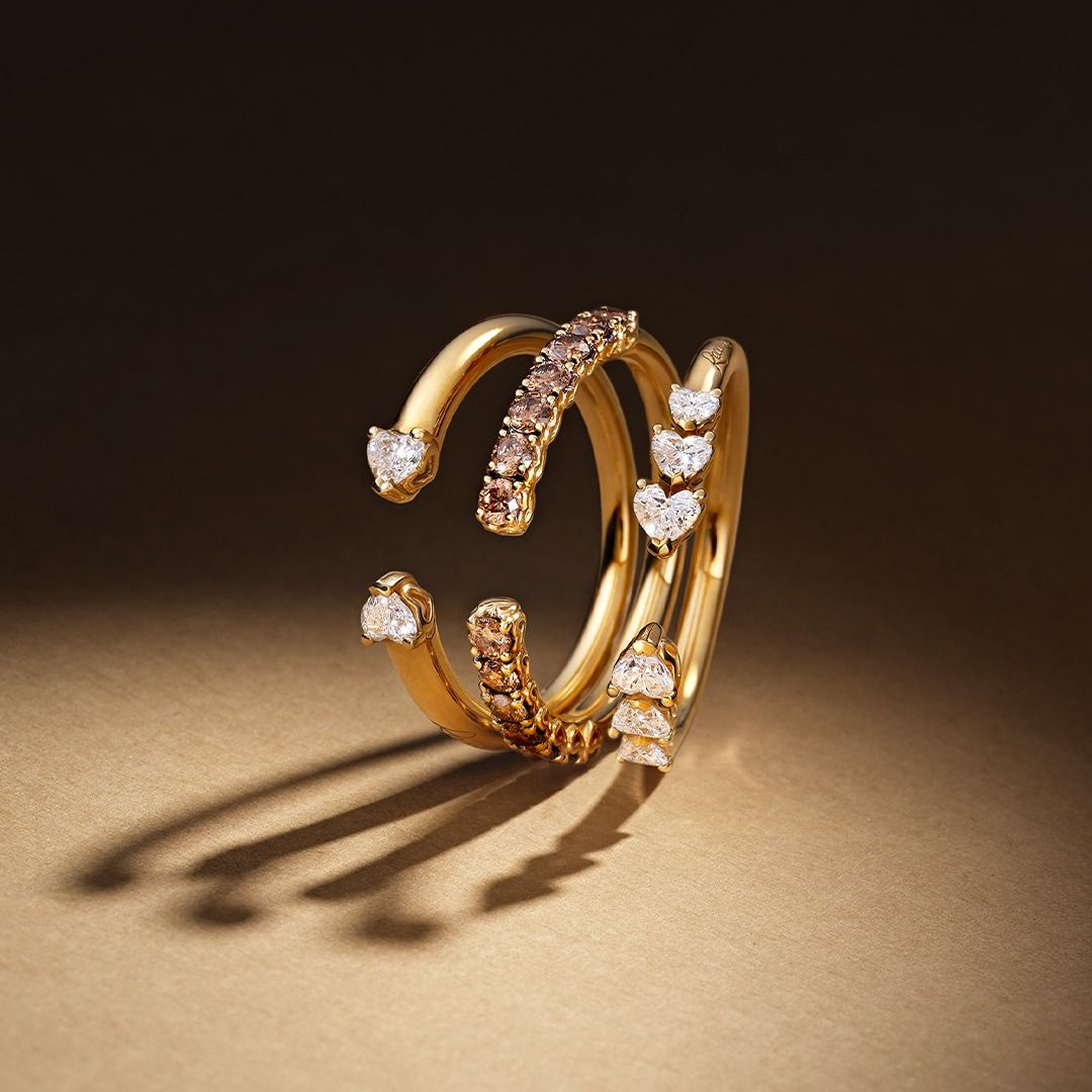
The three shades of gold
Colour is determined by the metals gold is alloyed with, not by its purity. That is why you can find the same carat in three colours.
- Yellow gold: the classic, warm, and goes with almost any style. You will see it, for example, in yellow gold wedding bands.
- White gold: cool and modern; white gold usually carries a rhodium plating that gives the bright white finish and may need renewing after some years. See the white gold engagement rings.
- Rose gold: owes its coppery tone to the copper in the alloy and has a romantic, slightly vintage air. Here are the rose gold engagement rings.
If you are torn between gold and other metals, types of metals gives you an overview of platinum, gold and silver.
Gold rings: how to choose the carat and colour
A gold ring is worn almost daily and takes more wear than earrings or a pendant, so it is worth being precise. Think about three things: how much you will wear it, your skin tone and wardrobe, and your budget. If the ring has a diamond, remember these are two separate decisions: the metal on one side and the stone on the other. At Omara the diamonds come with an independent GIA or IGI certificate and are natural or lab-grown; the latter cost approximately 60% to 80% less than a natural diamond of comparable quality. On a tight budget, saving on the stone lets you go for a richer metal.
Choose 18k if:
- You want the most intense colour and the highest purity
- It is a piece for life or a special gift
- You don't mind it being a little softer and higher in price
Choose 14k (or 10k) if:
- You want more hardness for heavy daily wear
- You prefer a more restrained price
- With 10k, you accept a paler colour and less gold in the piece
Our honest tip: there is no "best" carat in the abstract. 18k is the richest in gold; 14k is usually the practical middle ground. And don't assume every carat is available in every design: ask what options the piece you like comes in.
Summary: how to decide without overcomplicating it
10 carat gold exists, it is real gold and it is harder and cheaper, but it has less gold and a duller colour. 18k yellow gold is the richest and warmest, and 14k a good balance. The colour (white, yellow or rose) depends on the alloy, not on the carats. Choose the use and the budget first, and then the shade that suits you best.
Gold jewellery: explore the gold rings and earrings and compare the shades before you decide.
Frequently asked questions
Next article
Are lab-grown diamonds a good investment?
Do lab-grown diamonds lose their resale value? The honest answer is yes—but so do natural ones. In this article, we explain without any sugarcoating why no diamond is a financial investment, how the real math of depreciation works, and what you should actually focus on when choosing an engagement ring.