
Very, Very Slightly Included (VVS) Diamond Clarity Guide
The Standard of Excellence: A Deep Dive into VVS Diamond Clarity
In the hierarchy of gemstones, Very Very Slightly Included (VVS) diamonds represent the elite tier of "near-perfection." Occupying less than 1% of all gem-quality diamonds, these stones are favored by collectors and those who demand a high level of technical purity.
While VVS diamonds are not technically "Flawless," the inclusions they do possess are so microscopic that they are essentially non-existent to the naked eye—and even to many professionals without significant effort.
What Does VVS Mean in Practice?
The GIA defines VVS diamonds as containing inclusions that are extremely difficult for a trained gemologist to locate under 10x magnification. To understand this grade, one must distinguish between its two sub-categories: VVS1 and VVS2.
VVS1: The Peak of Near-Perfection
VVS1 diamonds sit directly below Internally Flawless on the clarity scale. Their inclusions are so minute that they are virtually impossible to detect at standard 10x magnification. Gemologists often have to use specialized lighting and search for extended periods to find:
- Pinpoints: Tiny dots of crystal that appear like a speck of dust.
- Needles: Slender, hair-like internal crystals.
- Internal Graining: Faint lines caused by irregular crystal growth.
VVS2: Technical Scarcity with Better Value
VVS2 diamonds are still extraordinarily clean, but their inclusions are slightly easier to find than those in a VVS1. This may be because the inclusions are marginally larger, more numerous, or located in a more visible position (such as under the table facet). These may include tiny crystals, feathers, or clouds, but they remain strictly invisible to the unaided eye.
Quality and Visual Performance
The primary appeal of VVS diamonds is their uncompromised brilliance. Because the inclusions are so microscopic, they do not interfere with the passage of light or the stone's structural integrity.
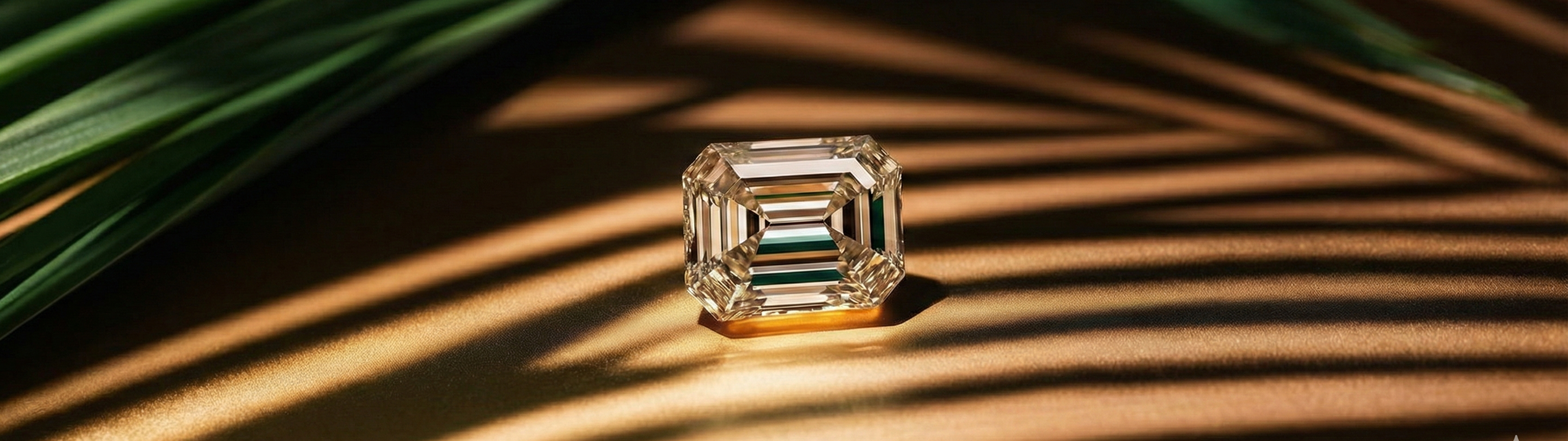
- Transparency: VVS diamonds offer a "crystal clear" look that is ideal for Step Cuts (like Emerald or Asscher cuts). Because these shapes have large, open facets that act as windows, lower clarity grades can't hide their flaws. VVS ensures the window remains pristine.
- Durability: Unlike lower clarity grades (such as I1 or I2), VVS diamonds have no internal features that threaten the diamond's stability.
- Versatility: Whether set in platinum or gold, or cut into a round or fancy shape, a VVS stone provides the maximum light return possible for its specific cut and color.
Understanding the VVS Price Premium
VVS diamonds command a high market value primarily due to their geological rarity. However, the pricing dynamics between VVS1 and VVS2 allow for strategic buying.
The Investment of VVS1
VVS1 prices reflect their technical excellence and rarity. As the carat weight increases, the price of a VVS1 stone grows exponentially. Collectors often choose VVS1 for its investment potential and the prestige of owning a stone that is technically at the top of the global supply.
The Strategic Value of VVS2
VVS2 diamonds offer a "sweet spot" for high-end buyers. They are visually identical to VVS1 and Flawless stones to the naked eye but typically come at a lower price point. This allows buyers to allocate more of their budget toward Cut Quality (which impacts sparkle) or Carat Weight (which impacts size) without sacrificing the "eye-clean" look.
VVS1 vs. VVS2: Which Should You Choose?
The choice between these two grades is often more psychological than visual.
| Grade | Visibility (10x Loupe) | Visual Performance | Technical Rarity |
|---|---|---|---|
| VVS1 | Virtually impossible to detect | Exceptional brilliance; no light interference | Extremely rare; top tier of VVS category |
| VVS2 | Extremely difficult to detect | Outstanding transparency and fire | Highly valued; slightly more available than VVS1 |
Next article
A Comprehensive Guide to Diamond Inclusions and Blemishes
Inclusions exist in virtually all diamonds, whether natural or lab grown. These internal features affect a diamond's clarity grading, value, and appearance.