
A Comprehensive Guide to Diamond Inclusions and Blemishes
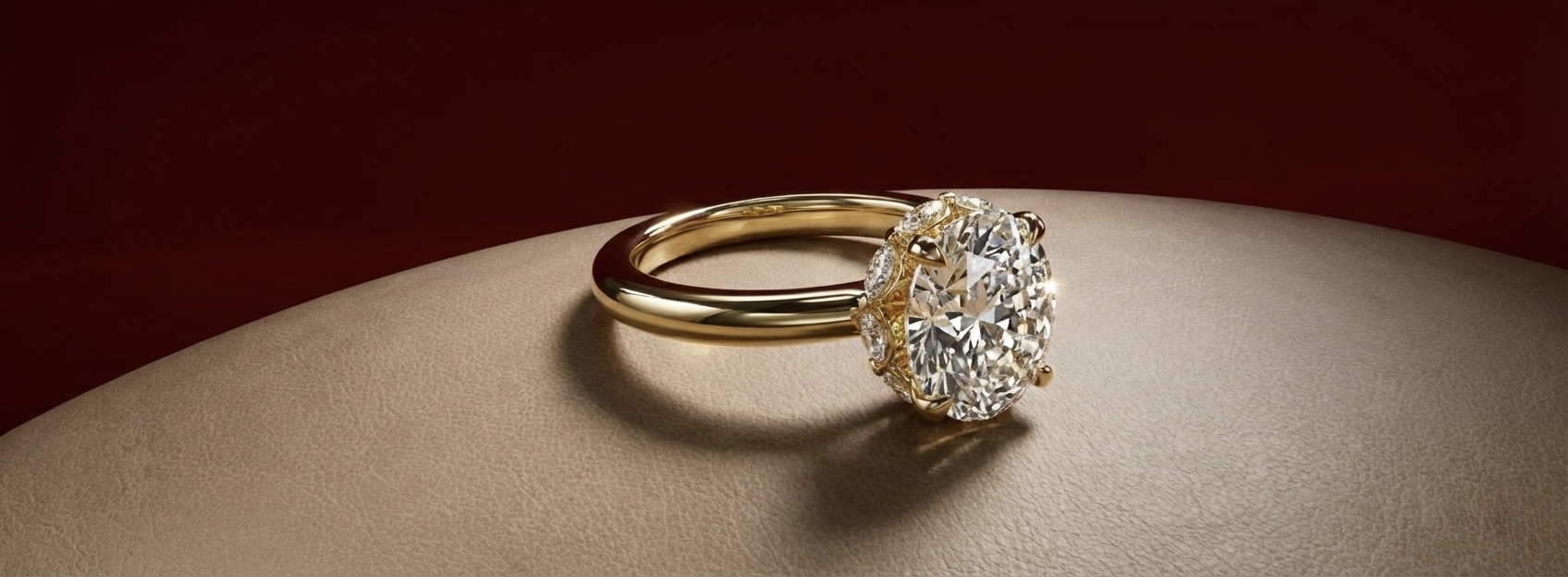
In the world of gemology, perfection is the baseline, but the "fingerprints" of a diamond—its inclusions and blemishes—tell the true story of its origin. Whether a diamond was forged over millions of years deep within the Earth or grown in a high-tech laboratory, these internal and external characteristics are the primary markers of its identity.
While the word "imperfection" might sound like a flaw to avoid, gemologists view these features as technical data points that determine a stone's clarity grade, its history, and its unique character — which is why at OMARA, diamonds come with a full clarity report so you can make an informed choice.
Inclusions vs. Blemishes: What’s the Difference?
It is essential to distinguish between where these marks are located, as they impact the diamond's value and grading in different ways.
- Inclusions: These are internal features that formed inside the diamond during its creation. They are "trapped" within the crystal structure and cannot be removed without re-cutting the entire stone.
- Blemishes: These are external marks that occur on the surface after the diamond has formed. These typically happen during the cutting and polishing process or through daily wear and tear.
The Internal Anatomy: Common Inclusion Types
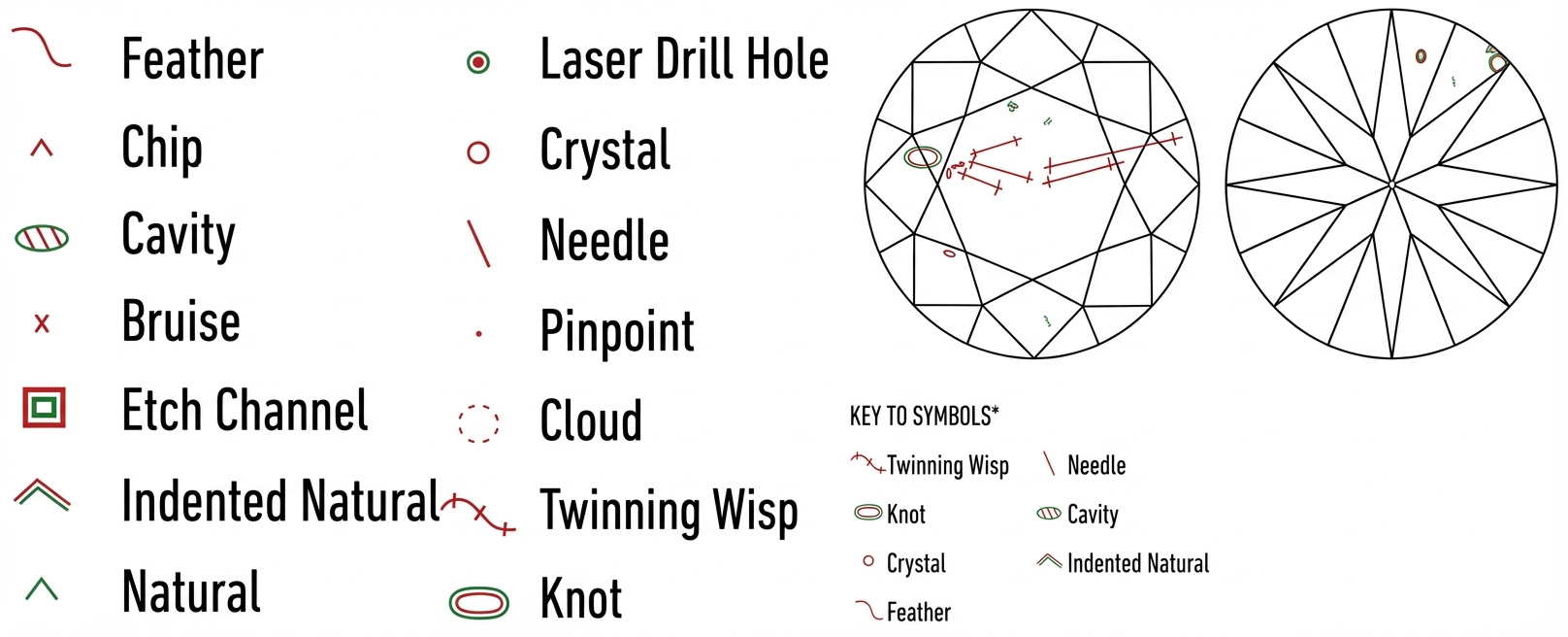
Internal inclusions occur when foreign materials are trapped during growth or when the diamond's crystal lattice develops irregularly. Under 10x magnification, gemologists look for several specific patterns:
- Crystals and Pinpoints: A Crystal is a mineral trapped inside the diamond. A Pinpoint is essentially a microscopic crystal that looks like a tiny dot.
- Clouds: A cluster of many pinpoints that, when grouped together, create a hazy or "milky" appearance.
- Feathers: A small internal crack or breakage. They are often white and feathery in appearance; however, if they reach the surface, they can pose a durability risk.
- Needles: Long, thin crystals that look like tiny rods or needles at high magnification.
- Graining: Internal lines or curves caused by irregular crystal growth. These can appear reflective or even colored.
- Cavities and Knots: A Cavity is an angular opening, while a Knot is an inclusion that extends all the way to the diamond's surface.
Surface Scrutiny: Common Blemishes
Blemishes are confined to the surface. While they are often less critical than internal inclusions, prominent surface marks can still dull a diamond's luster.
- Nicks and Chips: Small notches or shallow openings, usually found along the girdle (the edge) or the culet (the bottom point).
- Scratch and Abrasion: Thin white lines or "fuzzy" edges caused by friction or contact with other diamonds.
- Naturals: These are actually remnants of the original "skin" of the rough diamond left on the finished gem—a sign that the cutter tried to preserve as much weight as possible.
Natural vs. Lab-Grown Inclusions
While natural and lab-grown diamonds share the same chemical composition, their "growth stories" leave different marks.
Natural Diamonds act as time capsules. They often show distinctive growth lines and mineral inclusions that record millions of years of shifting pressure and temperature. These unique zoning patterns are virtually impossible to replicate in a lab.
Lab Diamonds are created in controlled environments, but they aren't always perfect. Their inclusions, often called "growth remnants," stem from the accelerated growth process. While a natural stone might have a mineral crystal, a lab stone might have a tiny remnant of the metallic catalyst used in the growth chamber.
Red Flags: Inclusions to Avoid
Not all inclusions are created equal. When shopping for a diamond—particularly in the SI1 or SI2 range—you should be cautious of "set-off" inclusions that could compromise the stone.
1. Durability Risks
Be wary of large feathers or deep cavities located near the points of fancy shapes (like the tips of a Marquise or the corners of a Princess cut). These create structural weak points that can lead to chipping if the stone is accidentally knocked.
2. Optical Killers
Dense clouds can make a diamond look "sleepy" or hazy, preventing it from reflecting light properly. Similarly, a large dark crystal situated directly under the "table" (the top flat facet) acts like a permanent black spot that is often visible to the naked eye.
Comparison Table: Internal vs. External Features
The following table summarizes the most common characteristics you will find on a GIA grading report.
| Feature Type | Origin & Location | Common Examples | Impact on Diamond |
|---|---|---|---|
| Internal Inclusions | Formed inside during growth (natural or lab) | Crystals, Feathers, Clouds, Pinpoints, Needles | Affects clarity grade and light path; can impact durability if large. |
| External Blemishes | Confined to the surface; occurs after formation | Scratches, Chips, Nicks, Naturals, Abrasion | Impacts surface luster and polish grade; often removable by repolishing. |
Diamond Inclusion FAQ
Next article

Understanding Included Diamond Clarity: A Guide to I1, I2, and I3 Diamonds
Diamond clarity in the Included grades represents the lowest end of the clarity spectrum, where inclusions are visible to the unaided eye.