
How to Choose Earrings: Studs, Hoops, Drops and Pearls

Earrings are the one piece of jewellery you put on before you leave the house and don't take off until the evening, so they should suit your day, not just your outfit. Studs, hoops, drops and pearls differ in real ways: comfort, style and the occasions they suit. And once you start thinking about diamond earrings, new questions appear: natural or lab-grown, which certificate, which fastening.
In this article we go through the four basic types, tell you what to look at when buying diamond earrings, compare them in a table and finish with a quick guide to deciding. If you are buying them as a gift, there are some tips at the end to help you get it right.
How to choose earrings: the four types and their character
Before you look at stones or metals, ask yourself a simple question: when will you wear them? Some earrings work for the office, the gym or everyday life; others for a wedding or a Christmas Eve dinner. If you want a full overview of every style, you will find it in the article What are the different types of earrings?.
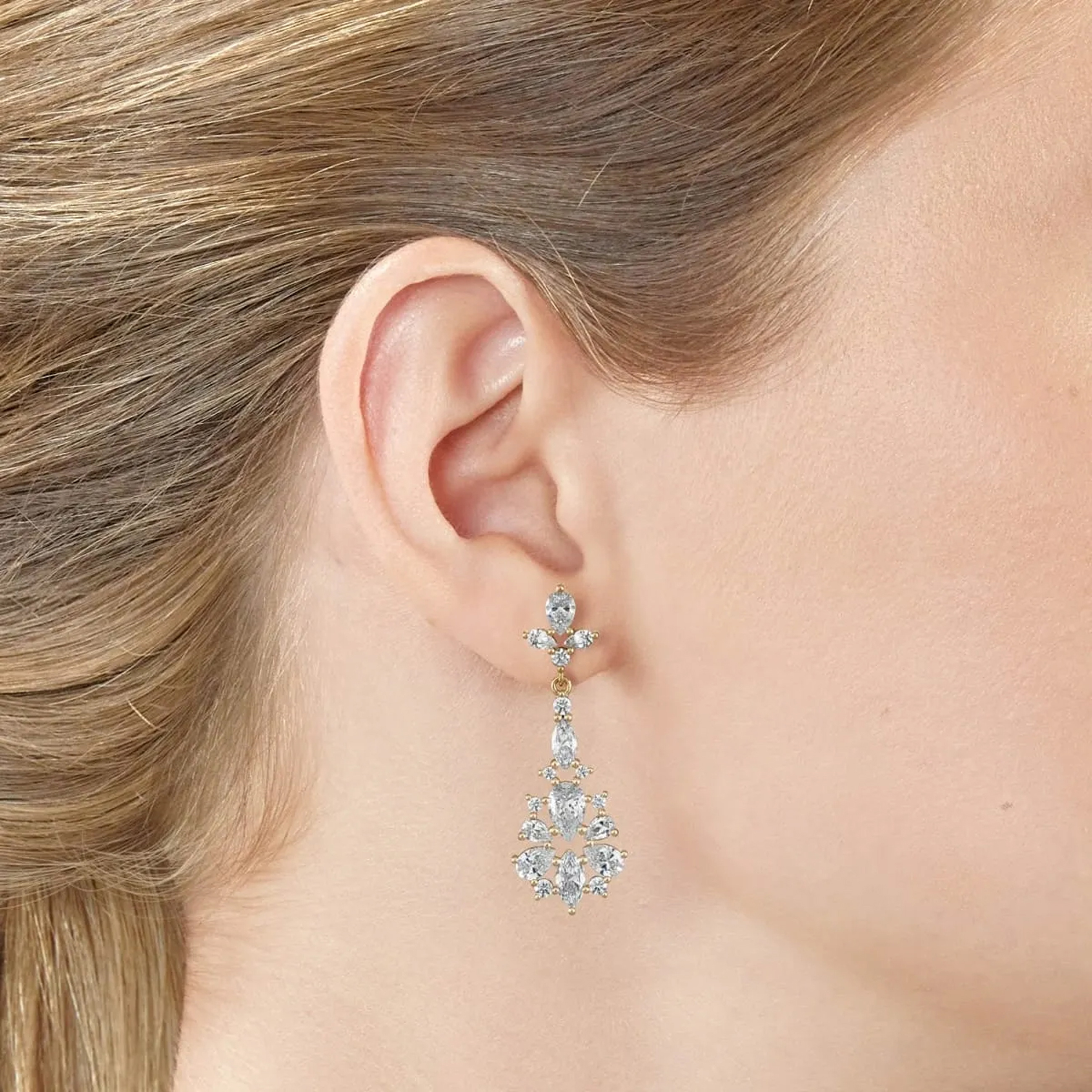
Stud earrings: the everyday all-rounder
Stud earrings sit close to the lobe, don't catch on your hair or scarf and can be worn from morning to night without a second thought. That is exactly where a diamond shines: a single well-set stone is a complete look.
- Fastening: usually a butterfly back that slides onto the post; with larger stones, a screw back is more secure.
- Size: look at the total weight of the pair (in carats) and also at the diameter, because at the same weight one shape can look bigger than another.
- Who they suit: anyone who wants one pair that works for any plan.
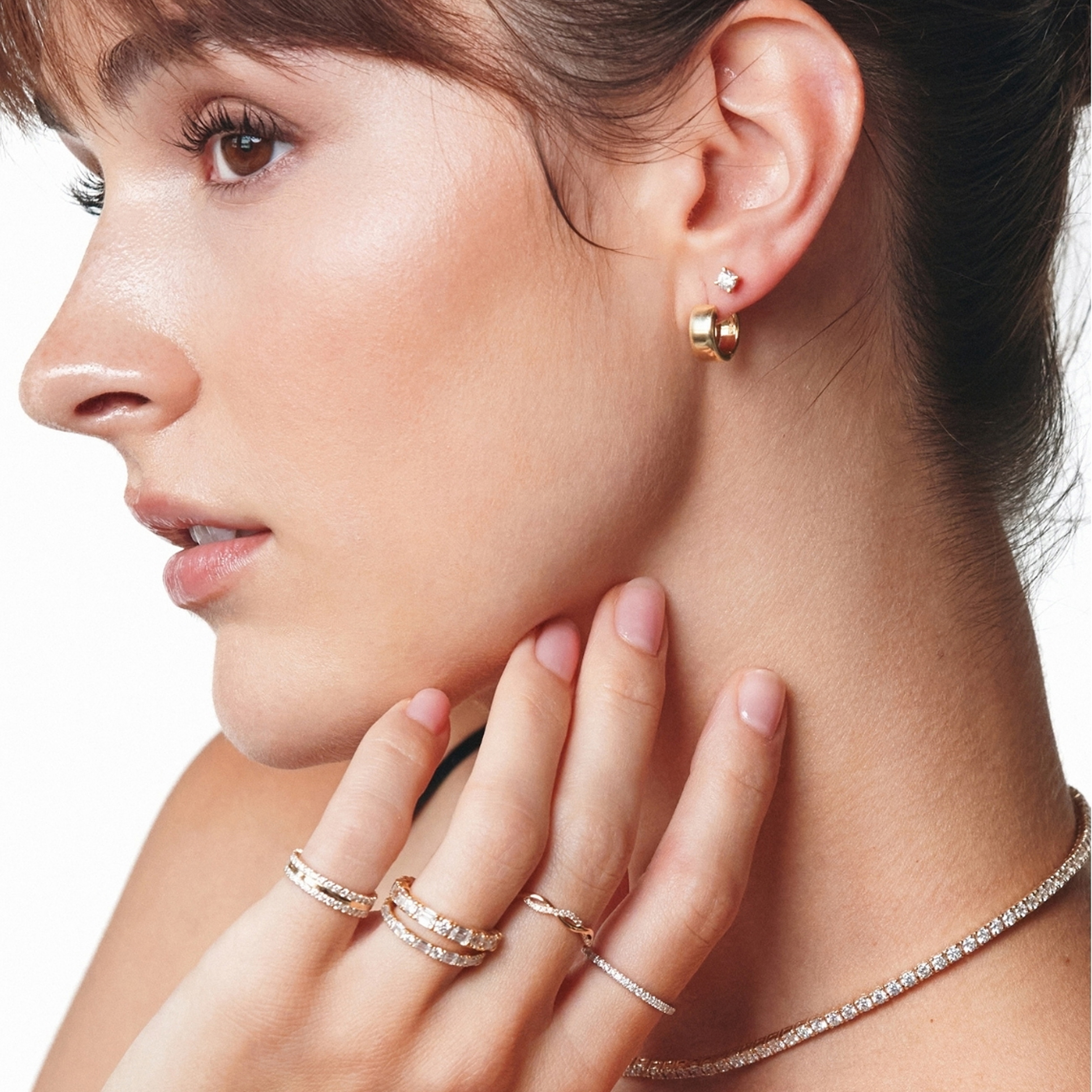
Hoops: from discreet to statement
Hoop earrings come in two versions today. Small, close-fitting hoops of around 10 to 15 mm in diameter feel delicate and work for every day; large ones are a statement accessory. The bigger the diameter, the more weight on the lobe, so with large hoops choose a slim profile.
Drop earrings: for dinners and big occasions
Drop earrings move with you and draw the eye to your face and neck. Length is what matters: short ones can be worn in the daytime, long ones are for the evening. For original earrings that don't go over the top, a short drop with a single stone is the middle ground.
Pearl earrings: quiet elegance
Pearl earrings give a polished, calm look with no effort. Pearls differ in origin and shape: freshwater pearls are more affordable and come in varied shapes, akoya pearls stand out for their roundness and lustre, and Tahitian or South Sea pearls tend to be larger and rarer. Do bear in mind that a pearl is softer than a diamond and doesn't like perfume, hairspray or acids: put them on last. To choose between the two stones, see the article Pearls vs. diamonds: what is the difference?.
Diamond earrings: what to check before you buy
Diamond earrings sit right next to your face, where sparkle is most noticeable. At Omara we only work with diamonds that have an independent GIA or IGI certificate, both natural and lab-grown. The difference between them is mainly origin and price, not appearance: lab-grown diamonds cost approximately 60% to 80% less than natural diamonds of comparable quality. For a pair of earrings that means either a larger stone for the same budget, or a saving.
And to be upfront about the other side of the coin: if you ever sell them, you will typically recover approximately 20% to 40% of the purchase price with a lab-grown diamond, and 40% to 60% with a natural one. Buy earrings because you like them and will wear them.
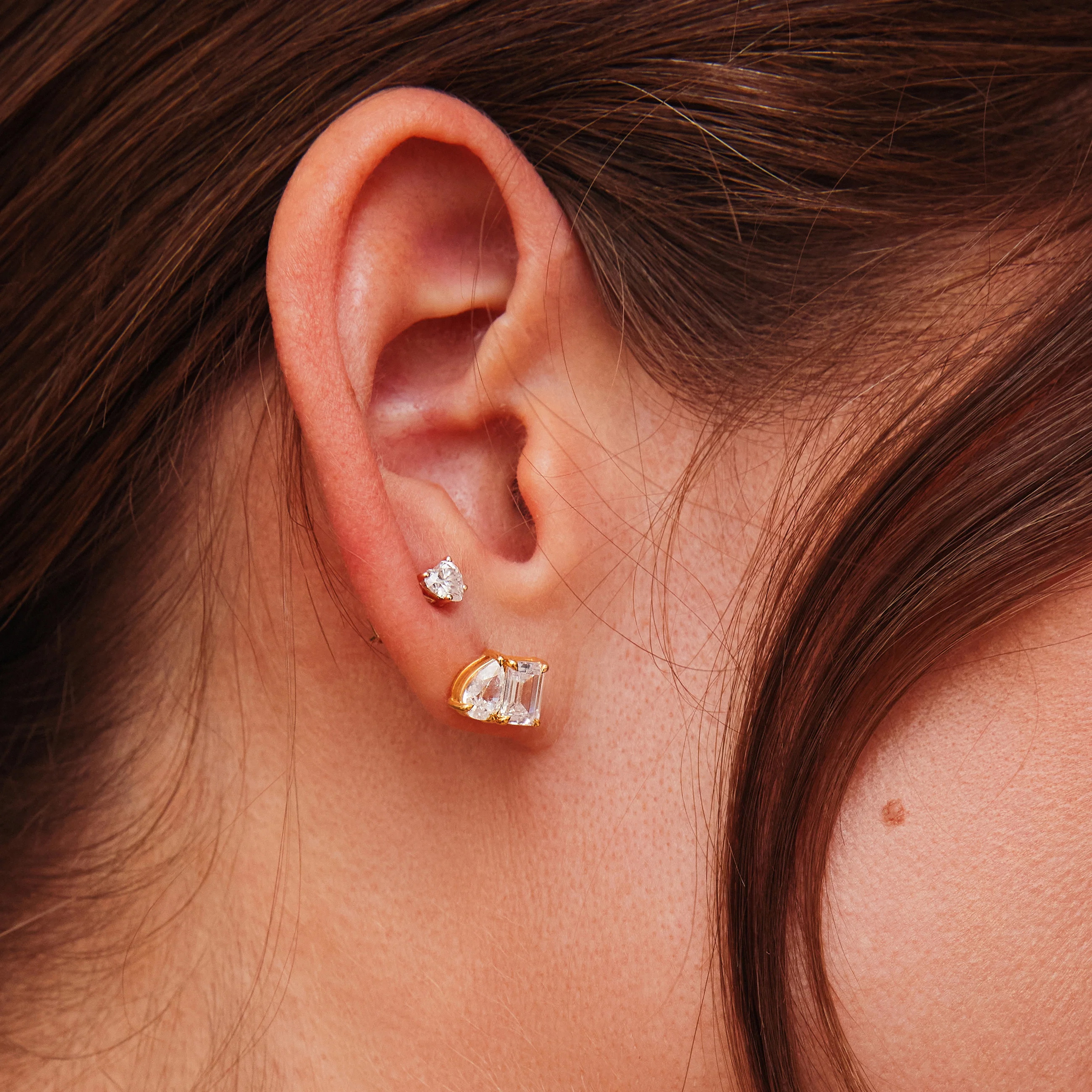
Five things worth checking
- Certificate: ask for the GIA or IGI certificate and about the quality of both stones in the pair.
- A matched pair: the two stones should look alike in size, colour and clarity; you wouldn't notice with one, but two side by side give it away.
- Setting: prongs let more light in; a bezel setting protects the stone better from knocks.
- Fastening: especially with larger stones, a screw back is not a luxury.
- Metal: if your ears are sensitive, ask for the exact composition of the alloy.
White, yellow or rose gold earrings: how the effect changes
The metal changes the character of an earring almost as much as the shape. Yellow gold brings warmth and a classic feel; white gold earrings for women are cooler and more modern, and make the diamond look even brighter; rose gold adds a soft, romantic tone that flatters many skin tones. Purity (normally 14 or 18 carat, meaning approximately 58.5% or 75% gold) affects colour, hardness and price.
Comparison: which type of earring goes with what
The table shows how each type behaves in real life. It is a guide, not a rule: a short drop can be more practical than huge hoops.
| Type | Everyday wear | Special occasions | Comfort | Keep in mind |
|---|---|---|---|---|
| Studs | Excellent | Yes, especially with a diamond | Very high | The fastening on larger stones |
| Hoops | Very good (small diameters) | Yes, with stones around the edge | High, lower as the diameter grows | The weight of large hoops |
| Drops | Shorter ones work best | Excellent | Medium | Length, and catching on hair or scarves |
| Pearls | Excellent (simple styles) | Yes | High | Softer pearl: perfume, hairspray, acids |
Good to know: a trend is of little use if it doesn't fit your routine, so first decide when you will wear them and then the style. If you are torn between two designs, you can ask us for advice in an online personal consultation.
Which earrings to choose: a quick guide to deciding
Choose studs or pearls if:
- You want one pair for every day and any plan
- You wear long hair, scarves or glasses and don't want anything catching
- You are looking for diamond earrings where the stone shines on its own
- You are buying a gift and don't know their style well
Choose hoops or drops if:
- You want the earrings to be seen and be part of the look
- You like to change style depending on the occasion
- You don't mind a little more weight, or taking them out for sport
- You already have studs and are looking for a "second pair"
Earrings as a gift: how to get it right
Earrings are a much-appreciated gift, but also a very personal one. A few pointers to avoid a miss:
- Notice what they already wear: yellow or white gold, hoops or studs, large or small.
- Check their ears are pierced: it sounds obvious, but it is the most common reason a gift can't be used.
- If in doubt, simple studs: there is no size to get right as with a ring, and they go with any look.
- Browse a selection made for gifting: in gift earrings you will find styles to start with.
Our honest tip: if you are torn between a bigger stone and better quality, a balance usually pays off with earrings. Hardly anyone notices a small difference in the weight of the stone, but an uneven pair or a loose fastening shows straight away.
Summary: start with when you will wear them
The best earrings are the ones you actually wear. For every day, studs or small hoops; for the evening, drops; for a calm, understated style, pearls. With diamonds, watch the certificate, that the pair is matched and the fastening, and be clear on how natural and lab-grown differ.
Earrings collection: discover diamond earrings in different styles and metals, and pick the pair you will enjoy wearing every day.
Frequently asked questions
Next article
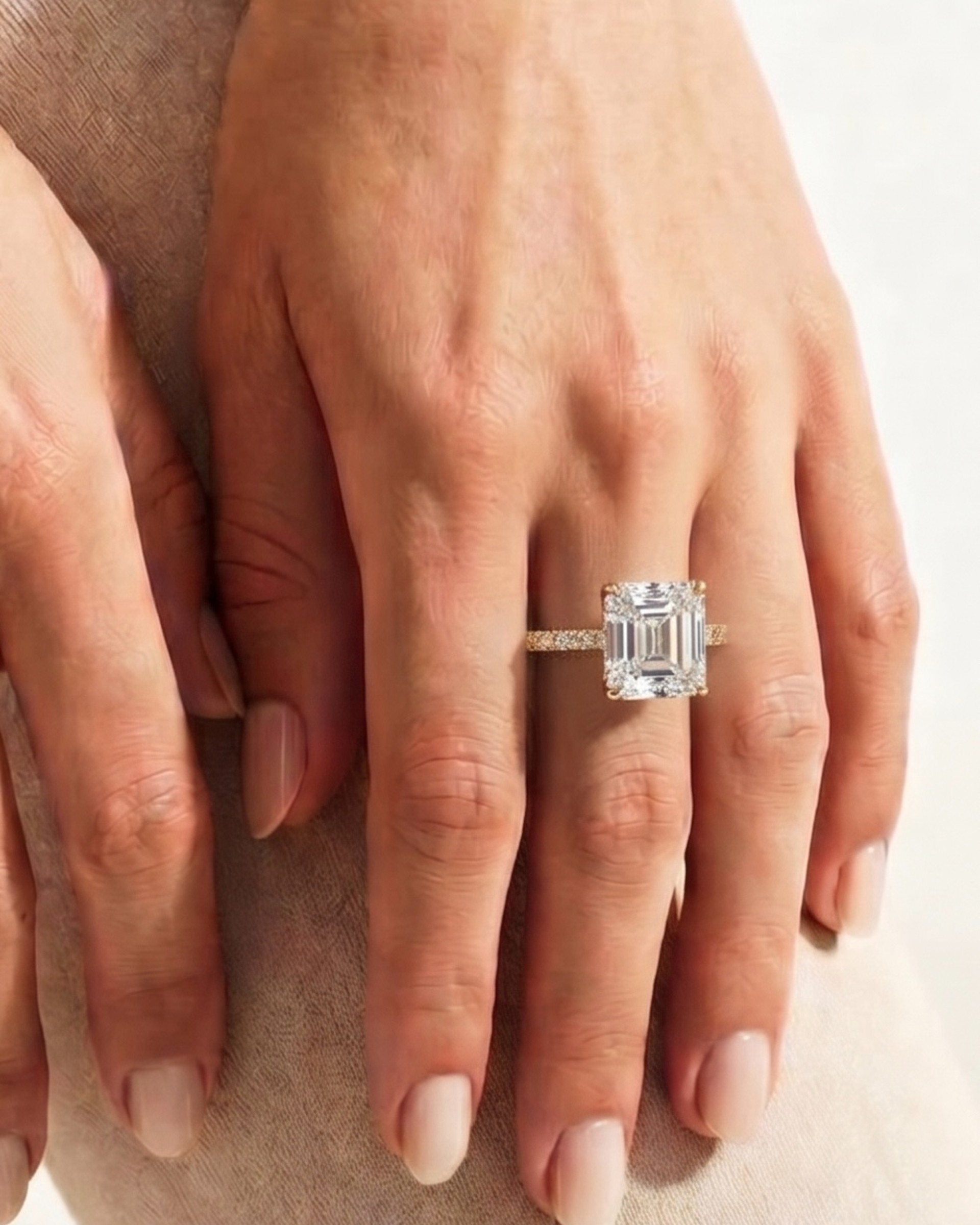
How to care for a gold and lab-grown diamond ring
Does a lab-grown diamond require special care compared to a natural one? The answer will put you at ease: not at all. In our practical guide, you'll learn how to easily and safely care for your gold ring right at home. Discover proven cleaning tips, find out which products to avoid, and learn how to keep your jewelry sparkling for years to come.